
Showing posts with label News. Show all posts
How to Improve Your API Security Posture

How to Improve Your API Security Posture


API Security Posture

APIs, more formally known as application programming interfaces, empower apps and microservices to communicate and share data. However, this level of connectivity doesn't come without major risks. Hackers can exploit vulnerabilities in APIs to gain unauthorized access to sensitive data or even take control of the entire system. Therefore, it's essential to have a robust API security posture to protect your organization from potential threats.

What is API posture management?#

API posture management refers to the process of monitoring and managing the security posture of your APIs. It involves identifying potential vulnerabilities and misconfigurations that could be exploited by attackers, and taking the necessary steps to remediate them. Posture management also helps organizations classify sensitive data and ensure that it's compliant with the leading data compliance regulations such as GDPR, HIPAA, and PCI DSS.

As mentioned above, APIs are a popular target for attackers because they often provide direct access to sensitive data and systems. By implementing an API posture management tool, organizations can proactively identify and remediate potential security issues before they're exploited.

You can download a free copy of the Definitive Guide to API Posture Management to learn more.

How does API posture management work?#

API posture management involves several key steps:

  1. Discovery: The first step is to identify all APIs in use within an organization. This can be done using automated tools or through manual inventory.
  2. Assessment: Once APIs have been identified, they need to be assessed for potential vulnerabilities and misconfigurations. This can be done using tools that scan APIs for known vulnerabilities or by conducting manual penetration testing.
  3. Remediation: Any vulnerabilities or misconfigurations that are identified need to be remediated. This may involve applying patches, reconfiguring APIs, or implementing additional security controls.
  4. Monitoring: Finally, APIs need to be continuously monitored to ensure that they remain secure. This may involve implementing intrusion detection systems, log analysis, or other monitoring tools.

How to improve your API security posture#

Here are some best practices that can help improve your API security posture:

1. Use Secure Authentication and Authorization Mechanisms#

    Authentication and authorization mechanisms are essential components of API security. They help ensure that only authorized users can access the API and perform specific actions. It is essential to use secure authentication and authorization mechanisms, such as OAuth 2.0 or OpenID Connect, to protect your APIs from unauthorized access.

    2. Implement Role-Based Access Control#

      Role-based access control (RBAC) is a security model that restricts access to resources based on the user's role. RBAC can help prevent unauthorized access to sensitive data by limiting access to only those users who need it to perform their job functions.

      3. Use SSL/TLS Encryption#

        SSL/TLS encryption is a security protocol that encrypts data transmitted between the client and the server. It helps prevent eavesdropping and ensures that data is transmitted securely. It is essential to use SSL/TLS encryption to protect your APIs from man-in-the-middle attacks.

        4. Implement Rate Limiting#

          Rate limiting is a technique that restricts the number of API requests that can be made within a specific time frame. It can help prevent API abuse and ensure that the API is available to all users. Implementing rate limiting can also help protect your APIs from denial-of-service (DoS) attacks.

          5. Monitor and Log API Activity#

            Monitoring and logging API activity can help detect suspicious activity and potential security breaches. It is essential to monitor API activity in real-time and log all API requests and responses. This can help identify security incidents and enable you to take appropriate action.

            6. Conduct Regular API Security Audits#

              Regular API security audits can help identify vulnerabilities and misconfigurations that may have been missed during the initial implementation. It is essential to conduct regular security audits to ensure that your APIs are secure and compliant with industry standards.

              Conclusion#

              APIs are a critical component of modern software development. However, with the increasing use of APIs, the risk of security breaches has also increased. Implementing API posture management can help improve your API security posture and protect your organization from potential threats. By following the best practices outlined in this article, you can reduce the risk of security breaches and ensure that your APIs are secure and compliant with industry standards.

              This Definitive Guide focuses on the key requirements for API Security Posture Management — click here to download now

              Microsoft Uncovers Banking AitM Phishing and BEC Attacks Targeting Financial Giants

              Microsoft Uncovers Banking AitM Phishing and BEC Attacks Targeting Financial Giants


              Banking and financial services organizations are the targets of a new multi-stage adversary-in-the-middle (AitM) phishing and business email compromise (BEC) attack, Microsoft has revealed.

              "The attack originated from a compromised trusted vendor and transitioned into a series of AiTM attacks and follow-on BEC activity spanning multiple organizations," the tech giant disclosed in a Thursday report.

              Microsoft, which is tracking the cluster under its emerging moniker Storm-1167, called out the group's use of indirect proxy to pull off the attack.

              This enabled the attackers to flexibly tailor the phishing pages to their targets and carry out session cookie theft, underscoring the continued sophistication of AitM attacks.

              The modus operandi is unlike other AitM campaigns where the decoy pages act as a reverse proxy to harvest credentials and time-based one-time passwords (TOTPs) entered by the victims.

              "The attacker presented targets with a website that mimicked the sign-in page of the targeted application, as in traditional phishing attacks, hosted on a cloud service," Microsoft said.

              "The said sign-in page contained resources loaded from an attacker-controlled server, which initiated an authentication session with the authentication provider of the target application using the victim's credentials."

              The attack chains commence with a phishing email that points to a link, which, when clicked, redirects a victim into visiting a spoofed Microsoft sign-in page and entering their credentials and TOTPs.

              The harvested passwords and session cookies are then used to impersonate the user and gain unauthorized access to the email inbox by means of a replay attack. The access is then abused to get hold of sensitive emails and orchestrate a BEC attack.

              AitM Phishing and BEC Attacks

              What's more, a new SMS-based two-factor authentication method is added to the target account in order to sign in using the pilfered credentials sans attracting any attention.

              In the incident analyzed by Microsoft, the attacker is said to have initiated a mass spam campaign, sending more than 16,000 emails to the compromised user's contacts, both within and outside of the organization, as well as distribution lists.

              The adversary has also been observed taking steps to minimize detection and establish persistence by responding to incoming emails and subsequently taking steps to delete them from the mailbox.

              Ultimately, the recipients of the phishing emails are targeted by a second AitM attack to steal their credentials and trigger yet another phishing campaign from the email inbox of one of the users whose account was hacked as a result of the AitM attack.

              "This attack shows the complexity of AiTM and BEC threats, which abuse trusted relationships between vendors, suppliers, and other partner organizations with the intent of financial fraud," the company added.

              The development comes less than a month after Microsoft warned of a surge in BEC attacks and the evolving tactics employed by cybercriminals, including the use of platforms, like BulletProftLink, for creating industrial-scale malicious mail campaigns.

              Another tactic entails the use of residential internet protocol (IP) addresses to make attack campaigns appear locally generated, the tech giant said.

              "BEC threat actors then purchase IP addresses from residential IP services matching the victim's location creating residential IP proxies which empower cybercriminals to mask their origin," Redmond explained.

              "Now, armed with localized address space to support their malicious activities in addition to usernames and passwords, BEC attackers can obscure movements, circumvent 'impossible travel' flags, and open a gateway to conduct further attacks."

              Guardz Launches AI-Powered Multilayered Phishing Protection To Secure SMEs

              Guardz Launches AI-Powered Multilayered Phishing Protection To Secure SMEs


              Guardz’s new Multilayered Phishing Protection: continuously scans for all inbound traffic with its advanced anti-phishing email protection solution; initiates detection through AI-powered anti-phishing and anti-malware engines; removes risky emails from users’ inboxes and automatically sends them to quarantine; monitors internet browsing to detect potential phishing attempts and delivers real-time alerts to system admins to enable timely responses; and  provides ongoing, active cyber awareness training and tailored phishing simulations for employees, fostering a culture of caution and vigilance. Perhaps most importantly when dealing with phishing, the Guardz solution empowers every employee to behave in ways that support and strengthen the business’s cybersecurity posture.

              “The proliferation of phishing attack as a service (AaaS) tools sold on the dark web is putting the SME ecosystem increasingly at risk. Our new AI-powered phishing protection solution provides SMEs and MSPs with a holistic and accessible solution to prevent the success of phishing attacks,” said Dor Eisner, CEO and Co-Founder of Guardz. “This is a significant addition to Guardz’s holistic cyber security offering for small businesses, ensuring that they can react to cyber risks in real time with swift remediations, but also be protected by cyber insurance for complete peace of mind – a true secure and insure approach.”

              The Multilayered Phishing Protection enables MSPs to provide their SME customers complete protection across all potential phishing attack vectors. It does so by automatically scanning the perimeter posture, inbound email traffic and internet browsing, and by providing ongoing, tailored cyber awareness training and simulation for employees. The platform automatically verifies emails for authentication protocols including Domain-based Message Authentication, Reporting and Conformance (DMARC), Sender Policy Framework (SPF) and checks for malicious forwarding rules.

              Fake Android Apps Ran Adware Campaign For Months


              Researchers caught a sneaky adware campaign targeting Android users for months. This campaign used several fake Android apps mimicking different utilities like pdf readers, weather apps, VPNs, game cracks, streaming services such as Netflix and YouTube, etc.

              Fake Android Apps Deployed Adware

              According to a recent report from Bitdefender, they detected 60,000 fake Android apps stealthily running adware campaign since (at least) October 2022.

              The researchers caught the malware following the alerts from the anomaly detection technology in the Bitdefender Mobile Security.

              Briefly, unlike most adware campaigns exhibiting intrusive behavior, this campaign spread organically. The malicious apps would appear to a target user upon searching for certain apps, such as mod games, free VPNs, etc. Then, owing to their apparent legitimacy, the app ads would lure users into downloading the malicious app.

              After reaching the device, the malware relies on the default strategy for Android app installation, requiring user input. Then, once the user taps the “Open” button to launch the newly installed app, the malware executes in the background.

              However, on the screen, an error message appears to trick the user into believing that the app failed to install. Yet, the lack of an app icon makes it difficult for the victim to uninstall it.

              Upon gaining persistence on the device, the malware remains dormant for some time. Then, after receiving the relevant commands from its servers, the malware starts displaying ads on the device when the user unlocks the phone.

              Bitdefender caught this campaign because the malware used the device’s browser to show the malicious ad, which their Mobile Security tool efficiently detected. Similarly, the malware also displays full-screen web view of ads.

              The researchers have shared the following demonstration of the malware in action.

              As always, to repel such threats, users must avoid interacting with apps or links from unknown sources. Likewise, equipping their devices with robust antimalware solutions is the key to preventing most malware attacks.

              Let us know your thoughts in the comments.

              North Africa Targeted by Stealth Soldier Backdoor in Espionage Attacks


              Check Point Research has discovered a sequence of cyberespionage attacks using a previously undisclosed backdoor named Stealth Soldier targeting Libyan organizations. This advanced malicious software is a customized modular backdoor that possesses surveillance capabilities.

              Libyan organizations as the target and the malware infrastructure indicate the potential return of a threat actor referred to as "The Eye on the Nile." which was seen in action in 2019.

              Diving into details

              The Command and Control (C&C) network of Stealth Soldier is a component of a broader infrastructure that has been used, at least partially, for spear-phishing attacks targeting government entities.
              • The infection commences with the downloader, which initiates the attack chain. While the precise method of delivery used by the downloader remains undisclosed, social engineering is considered a likely possibility.
              • The most recent version of the implant was reportedly compiled in February 2023.
              • The malware's infection procedure encompasses the retrieval of numerous files from the C&C server, including the loader, watchdog, and payload.

              Let’s discuss its versions

              Security experts have identified three distinct infection chains involving three different versions of Stealth Soldier malware: 6, 8, and 9. 
              • Different versions vary by factors such as filenames, mutex names, XOR keys, and directory names. 
              • Moreover, there is a discrepancy in the values assigned to the SOFTWARE\Microsoft\Windows\CurrentVersion\Run registry key for persistence:
              • "Cache" for Version 6
              • "WinUpdate" for Version 8
              • "DevUpdate" for Version 9

              Nonetheless, the overall flow follows a similar pattern for different versions and exhibits the same underlying logic.

              Attribution

              • Check Point Research uncovered similarities between the present operation and the previously identified "Eye on the Nile" campaign, which Amnesty International and Check Point Research had associated with government-affiliated entities. 
              • The presence of overlapping infrastructure implies a potential correlation between these two campaigns, highlighting the tenacity and flexibility of the threat actor responsible for their orchestration.

              The bottom line

              The recent Stealth Soldier malware campaign directed at Libyan organizations underscores the growing complexity of cyberespionage activities. The utilization of personalized backdoors and advanced surveillance functionalities presents substantial risks to the data security and privacy of the entities being targeted.

              5 Reasons Why Access Management is the Key to Securing the Modern Workplace


               The way we work has undergone a dramatic transformation in recent years. We now operate within digital ecosystems, where remote work and the reliance on a multitude of digital tools is the norm rather than the exception. This shift – as you likely know from your own life – has led to superhuman levels of productivity that we wouldn't ever want to give up. But moving fast comes at a cost. And for our digital work environment, that cost is security.

              Our desire for innovation, speed and efficiency has birthed new and complex security challenges that all in some way or another revolve around securing how we access resources. Because of this, effective access management now plays a more critical role in securing the modern workplace than ever. Follow along as we uncover five reasons why this is the case.

              Educating People About Security is Not Working#

              For years, we've held the belief that educating people about cyberthreats would make them more cautious online. Yet, despite 17 years of annual Cybersecurity Awareness Month initiatives, internet users are more susceptible to online threats than ever. Why is this so?

              The shortcoming of security training is that it often fails to consider the wider organizational culture, policies, systems, and individual nuances such as a person's IT skills, comprehension levels, age, and gender. As a result, while training might cause temporary changes in behavior, it struggles to imprint lasting changes.

              Now, we can't simply discard training.

              What we can do is integrate it into a broader approach, one that recognizes the limitations of cybersecurity education and applies security solutions in areas like access management to minimize human-related risk.

              This type of approach is similar to how the car industry does safety. We don't train everyone to be a professional driver. That would be unsustainable and hard to scale. Instead, we build cars with safety measures in place that greatly reduce the chances (and potential impact) of accidents.

              We're Only Becoming More Digital#

              The rapid digital transformation of the modern workplace brings both advantages and challenges. With the average company using over 250 apps and global cloud spending projected to reach $600 billion by 2023, we've seen unprecedented productivity boosts. However, every new app, device, and user increases an organization's digital attack surface.


              This expansion puts immense pressure on IT teams who must maintain control of an organization's digital assets. Ensuring every tool is updated, every device is secure, and every user has the correct access rights is a complex task.

              In this context, effective access management is paramount. It helps organizations maintain control over who can access what, securing the attack surface and mitigating the risk of unauthorized access.

              Tricking Humans is Easier than Exploiting Systems#

              Cybersecurity is no longer confined to just securing systems; it's about securing humans as well.

              This shift in focus has been largely driven by the rise of social engineering tactics, where cybercriminals employ techniques like phishing, pretexting, and baiting to manipulate individuals into revealing sensitive information. The reason for this shift is simple: it's often easier to trick a person than to hack a system.

              Humans, being creatures of habit, follow predictable patterns and can be susceptible to cognitive biases. For instance, we tend to be overly trusting and often seek the path of least resistance. These traits make us prime targets for cybercriminals who employ sophisticated schemes to exploit these vulnerabilities. In essence, our predictable behavior makes us the weakest link in the cybersecurity chain.

              The rapid pace of digital transformation has also added to this problem. As we face an increasing amount of information daily and are expected to work at ever-increasing speeds, we risk falling into decision fatigue. This high-pressure environment can lead us to let our guard down, making us more susceptible to cyberattacks.

              Given these challenges, it's clear that security solutions must adapt to our behavior, not rely on it. This entails implementing robust access management measures to protect against common human errors such as accidental data sharing or the use of weak passwords.

              Technology Falls Short When Humans Make Errors#

              Even the most sophisticated security systems are not immune to one profound vulnerability: human error. However, despite accounting for at least 88% of breaches, human error is an often-overlooked element that could potentially bring even the most advanced security systems to its knees.

              The paradox lies in the fact that while technology evolves at a rapid pace, our habits and behaviors don't necessarily keep up. For instance, even with an advanced security infrastructure in place, a single moment of negligence such as clicking on a suspicious link or using an insecure network can expose an entire system to threats.

              The implications of human error in cybersecurity can be likened to the act of meticulously locking your front door, only to leave a window wide open. No matter how advanced or secure your lock system is, if an open window is available, your security measures are rendered pointless. The challenge, therefore, is to find solutions that not only protect against external threats but also factor in the variable of human error.

              We're Living in a Password Pandemic#

              In the age of digital transformation, we've found ourselves grappling with what can be best described as a "password pandemic." As digital tools become more embedded in our daily lives, the number of accounts and consequently, the number of passwords each of us has to remember, have exploded.

              The result is a troubling trend where individuals are increasingly losing control over their passwords. To cope with this, it's become all too common to resort to risky password practices, like using the same password across multiple platforms, or using easily guessable passwords. In the quest for convenience, we are willingly sacrificing security, thereby presenting cybercriminals with easy opportunities.

              What's more, businesses face the daunting task of managing an enormous amount of login credentials, further escalating the risk of password-related breaches. This "password fatigue" makes it clear that we need smarter, more user-friendly approaches to managing access to our digital resources, ones that can offer convenience without compromising on security.


              Implementing an Access Management Solution is Paramount#

              The common thread running through these trends is that they all pose critical challenges to securing access to systems and resources.

              To be fair, businesses have deployed traditional access management measures like SSO for decades. Instead, what needs to change is that these solutions must be able to adapt to both an expanding digital attack surface, but also embrace the unreliable nature of human actions.

              The burden of security can no longer fall solely on the user's awareness or intent. Organizations must shoulder the responsibility of cybersecurity, which entails setting employees up for security success by proactively enforcing secure habits through solutions that suit the way people work today.

              For businesses operating within Europe, the urgency of these measures is heightened due to the upcoming implementation of the NIS2 directive. Non-compliance is not an option and carries serious legal and financial consequences. Hence, implementing robust and efficient access management systems isn't just a choice, it's a necessity.

              Address Modern Access Management Needs with a Modern Solution#

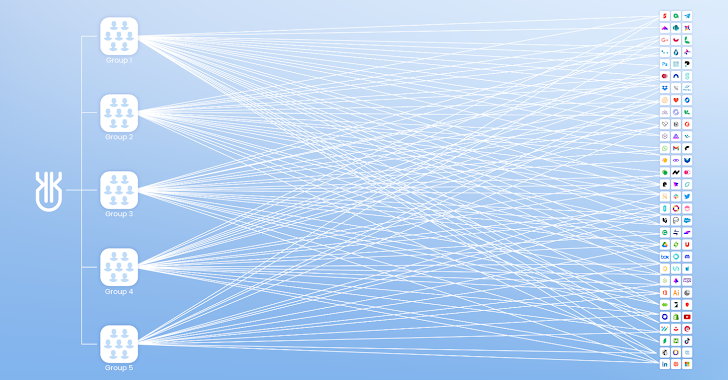
              Uniqkey, a cybersecurity company originating from Europe, aims to address the access-related challenges posed by today's ever-evolving digital workplaces. Recognizing that IT teams are heavily overloaded, Uniqkey provides a comprehensive access management platform designed to simplify and enhance access control and password management.

              This platform streamlines access management by offering centralized control of an organization's digital assets. By doing so, Uniqkey effectively simplifies the task of managing permissions and user access, making it easier to ensure the integrity of a company's digital infrastructure.

              Access Management

              Uniqkey also offers an intuitive password manager designed for employees that empowers individuals by securing the use of passwords in the workplace. By shifting the burden of secure password practices away from the user and onto an automated system, Uniqkey promotes safer habits without demanding significant behavioral changes from the end user.

              This user-centric approach is what distinguishes solutions like Uniqkey from competitors.

              Beyond empowering IT tools with the right tools to manage access effectively, their solution embraces people's innately flawed behavior, fostering healthy secure practices from the bottom and up. This way, they permanently address the human-centered challenges posed by our modern digital workplaces.

              In conclusion, as our modern workplaces become increasingly digital, our approach to security needs to evolve concurrently. We can't afford to overlook the importance of a modern access management solution. Platforms like Uniqkey offer businesses the opportunity to stay ahead of potential access-related threats, ensuring not just survival, but the ability to thrive in this ever-evolving digital landscape.

              Popular Posts